Scale rewards structure.
For service businesses of roughly 20 to 200 people, where the work crosses several systems and teams, and too much of it runs on what people remember.
If your team is doing work software should be doing…
Automation takes the repetitive part, and those hours go back to your people.
If you’re scaling and want the workflow to hold…
It gets rebuilt for the volume you’re growing into.
If you want one clear view of the operation…
The systems get connected, so the numbers line up in one place.
If you want the process to outlast any one person…
It gets built into the system, so knowledge stays with the business.
Every manual step removed is time back, cost avoided, and momentum gained.
All three touch the same work. Nothing should get lost between them.
From how work happens to what gets built.
Align
Clarify the vision and what success looks like.
Listen
Learn what frontline teams need to deliver it.
Design
Make the rules and exceptions explicit, then design the workflow around them.
Build
Turn the design into systems that run.
Refine
Compare what we intended with what happens, then adjust and carry it forward.
Strategy and build come from the same person, so nothing gets lost handing a plan to someone else to implement. I gather, map, and build. Your team brings the expertise and the red pen, not another project to manage.
The method in practice
Three different fields. The same gap between intent and reality.
Three tools that did not talk to each other.
See the full case study →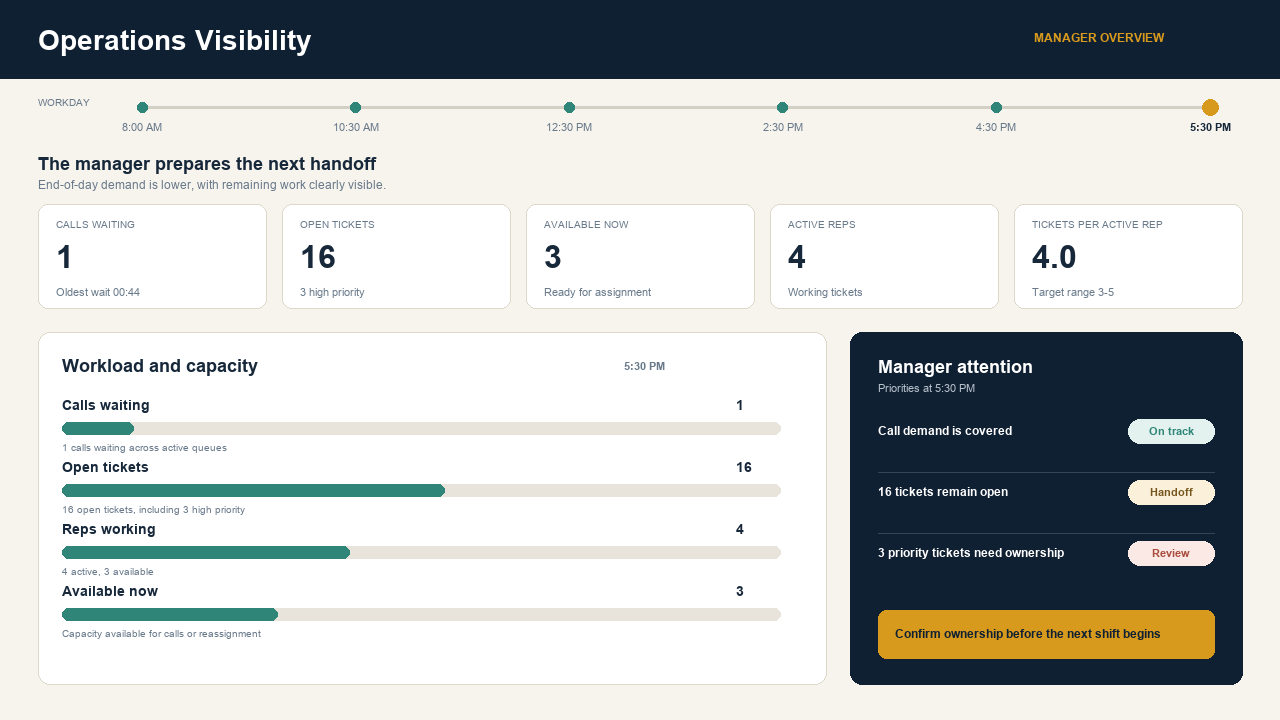
Complex forms, turned into a few plain questions.
One engine that turns a long form into guided questions, maps each answer back to its field with a confidence score, and flags what a reviewer needs to check. Grant applications, passport packets, and insurance submissions all run through it.
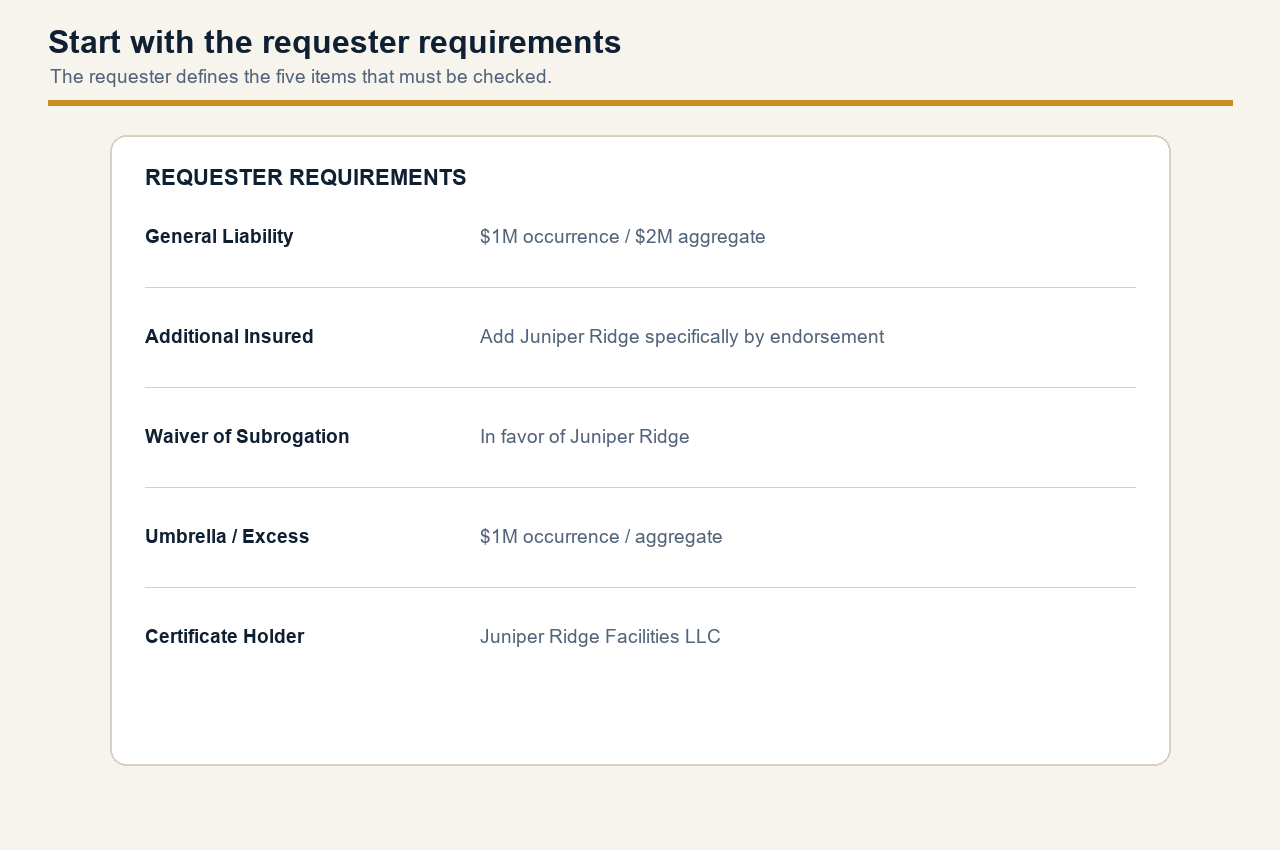
See the full case study →A person stays at the decision point in all three: managers confirm availability, an agent verifies each certificate, and a reviewer signs off on every form packet before it goes anywhere.
Build for where you’re going.
Wherever you’re taking this business, let’s build the structure that gets it there.
See How We Could Work TogetherMS candidate, Business Analytics and Applied AI · Simon Business School, University of Rochester